Website History
Table of Contents
The Beginning: A High Schooler's First Website
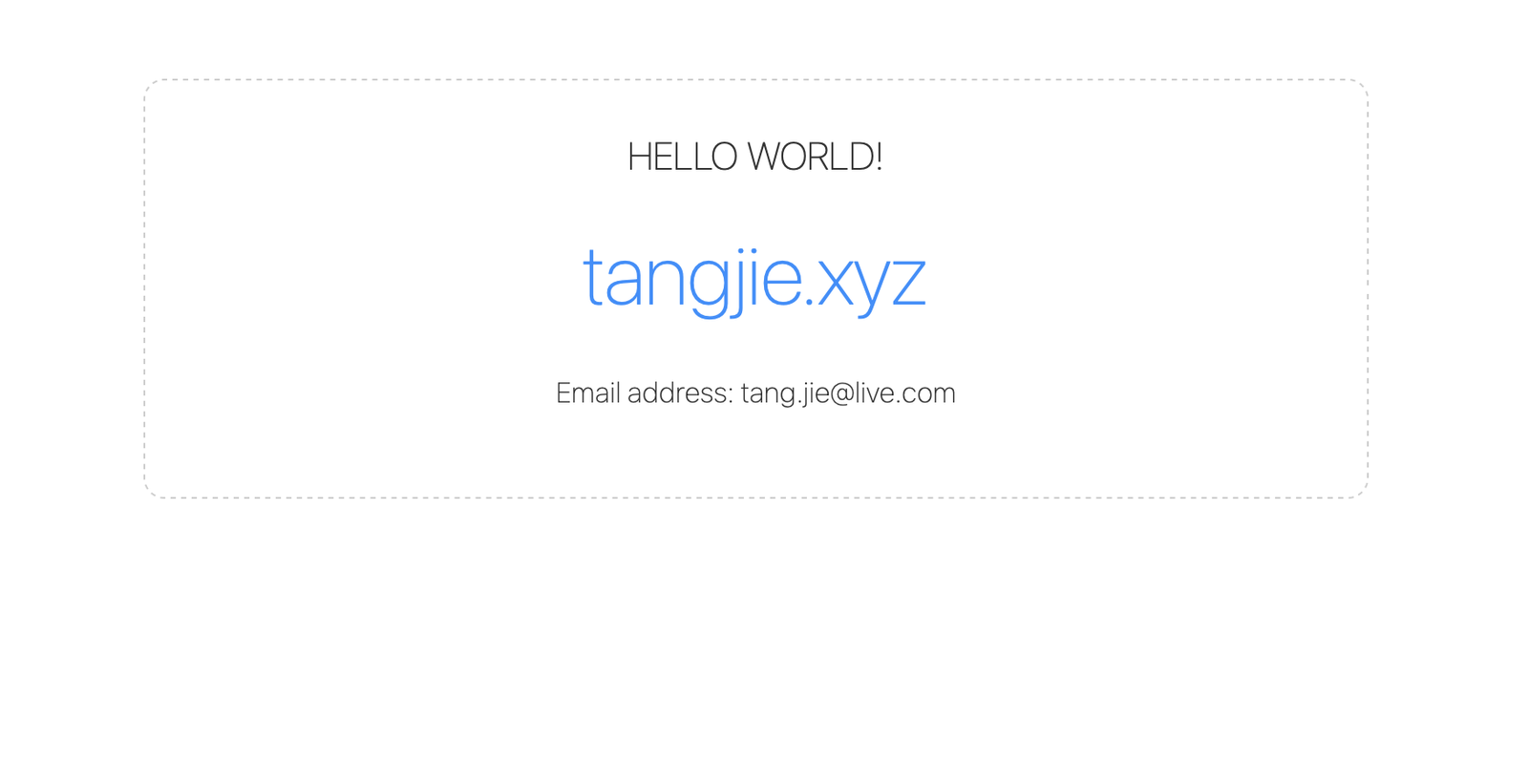
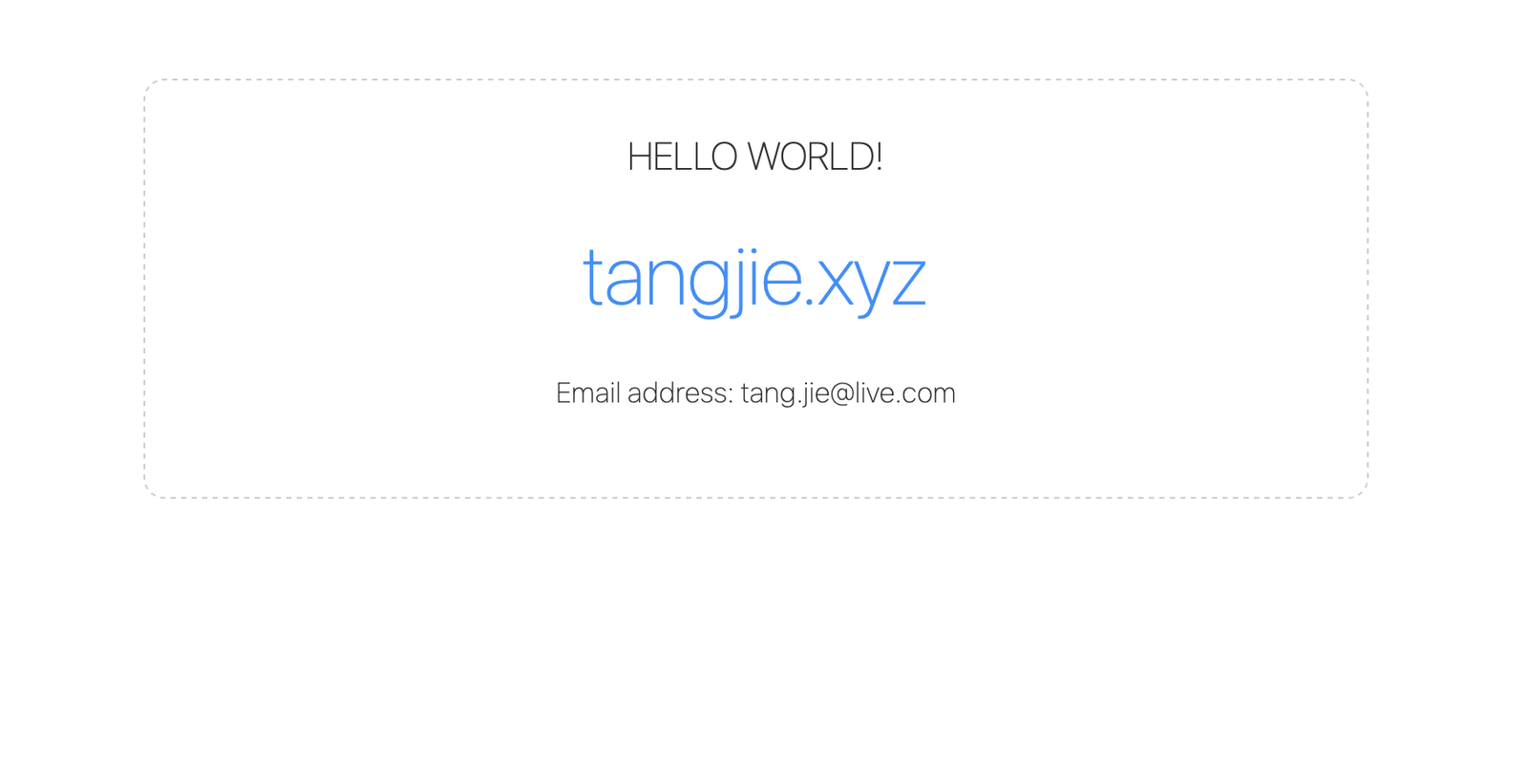
It all started during the summer after my high school entrance exam. I was fresh out of the exam hall, filled with excitement about coding and building things on the internet. Like many beginners, I created my first personal website as a static page hosted on GitHub Pages at jackytjie.github.io.
The initial version was simple—just HTML, CSS, and a bit of JavaScript. I remember spending countless nights tweaking the design, adding animations, and making it "cool." The repository showed my early experiments: a boom animation, a jump game, and a guestbook feature that was, admittedly, quite basic. Every commit was a learning experience.
The Domain: Making It Mine
At some point during my first year of high school, I decided I wanted a proper domain. tangjie.xyz became the new home for my digital presence. I'll never forget the excitement of configuring DNS records to point my custom domain to GitHub Pages. Suddenly, my little corner of the internet felt like it had grown up.
The Static Years (2022–2025)
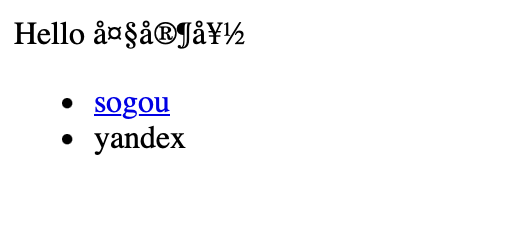
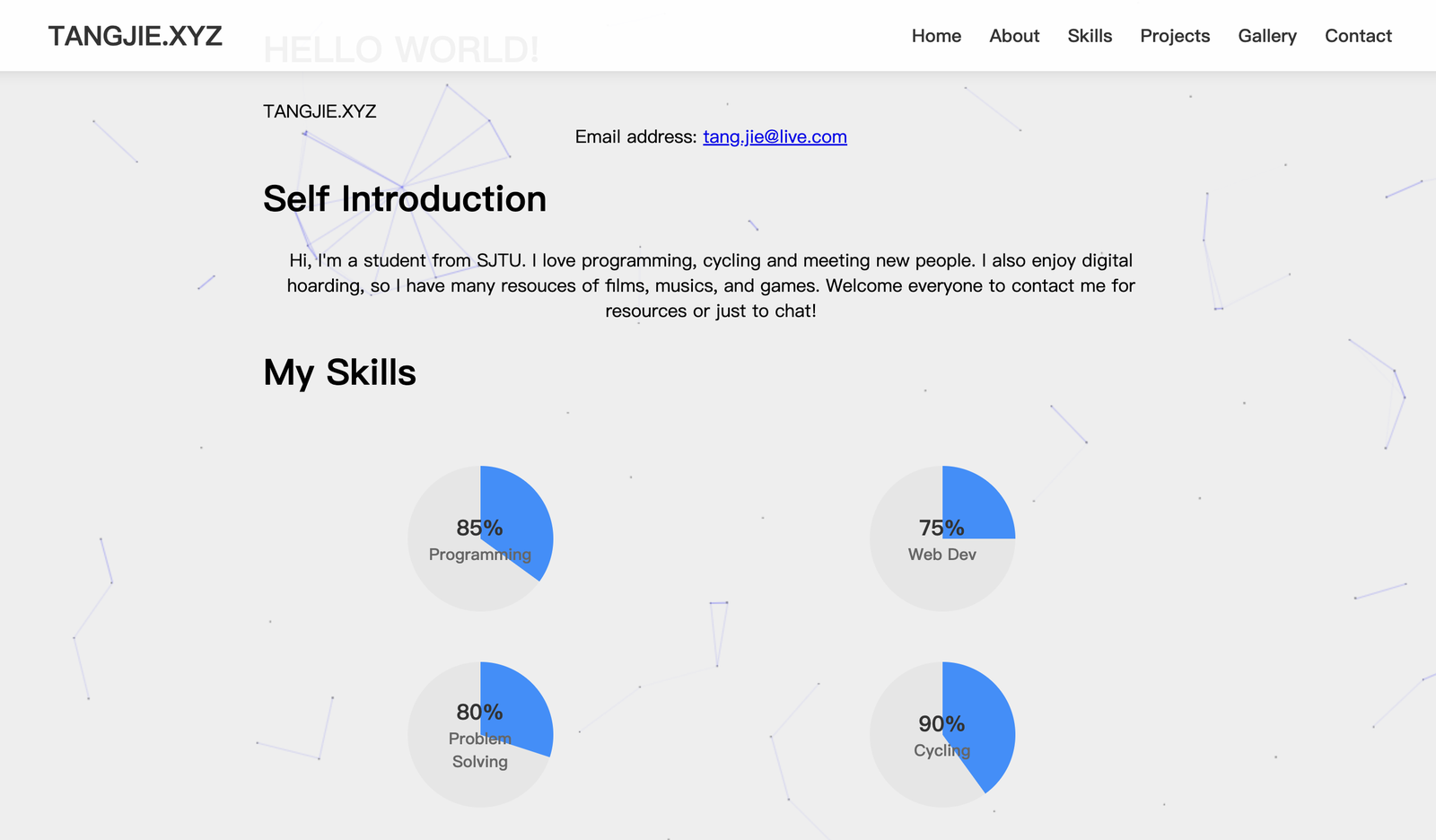
Throughout high school, my website remained a static site. I kept adding features and experimenting, but everything was client-side. Looking back at the old GitHub Pages repository logs, I can see the journey:
- November 2022: Initial creation of
index.html - Adding CNAME for custom domain
- Experimenting with various JavaScript libraries (jQuery, GSAP)
- Creating interactive elements like a boom effect and jump game
- Multiple design iterations and mobile display fixes
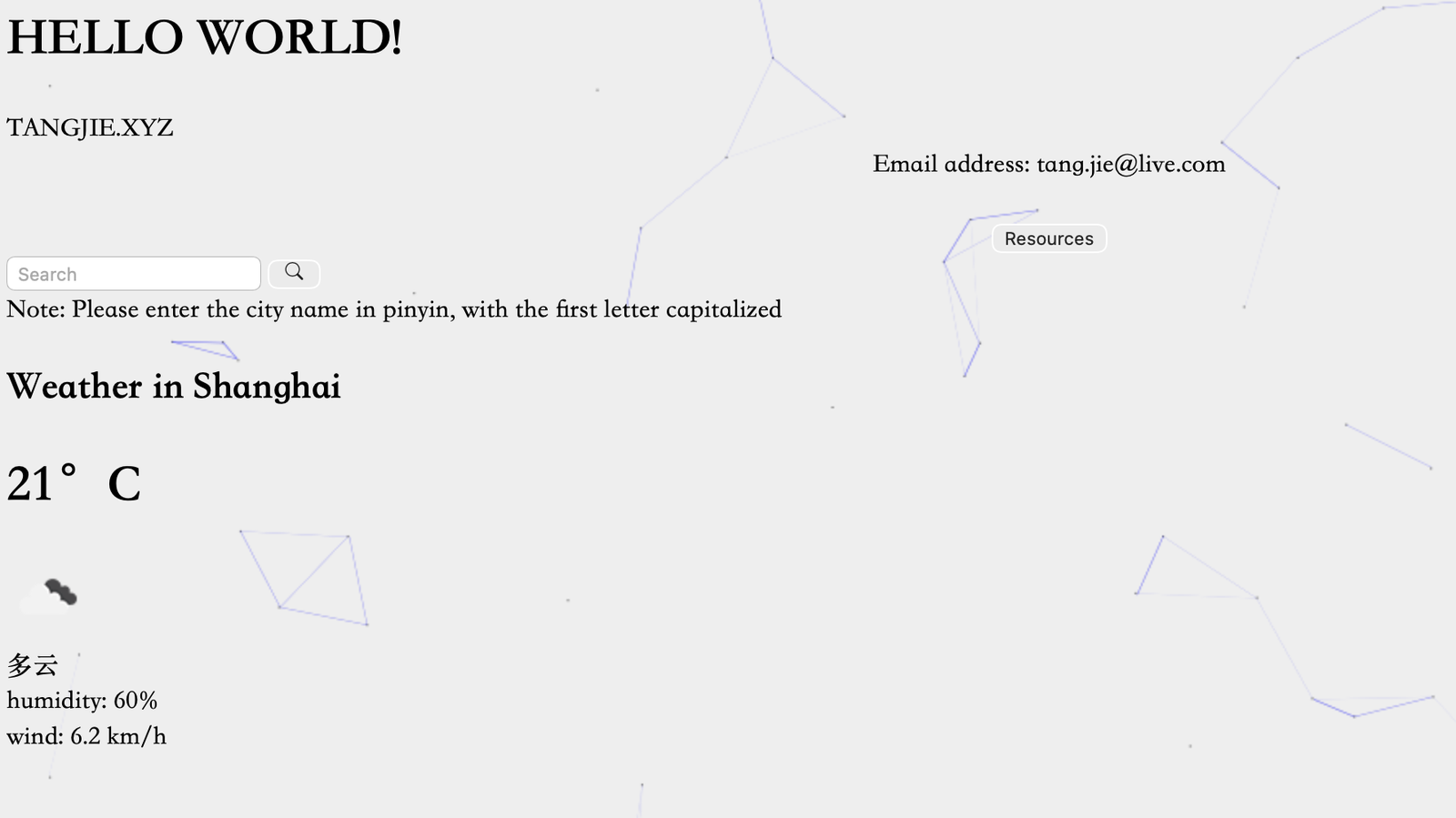
p.s. As the snapshot is taken with git checkout, some css fail to load.
The site served as a portfolio and a playground. It was where I learned about web fundamentals—the DOM, CSS layouts, event handling, and how to make things look good across different devices.
The Migration: From Static to Dynamic
When I entered university and moved into my dorm, I brought my own server setup. This marked the beginning of a new era. I decided to migrate my static site to a proper web application framework. Flask became my framework of choice.
The first commit of the Flask version (6a602cd8d87573b395952641dff68f2536a1773b on March 16, 2026) was titled "initial commit." At that point, I had:
- A basic Flask application structure
- SQLite database for data persistence
- Initial templates
The Big Leap: The Design Refactor
The most significant milestone came on June 21, 2026, with the "Full website redesign: liquid glass UI, blog, admin panel, dark mode" commit. This was a complete overhaul:
What changed:
- A sleek liquid glass design system with CSS custom properties and backdrop-filter effects
- Jinja2 template architecture for better organization
- Auto light/dark mode with system detection and localStorage persistence
- A full blog with Markdown support, tag filtering, and pagination
- An admin panel built with Alpine.js featuring tabs for Messages, Blog, Tags, Projects, and Gallery
- GitHub projects automatically imported into the database
- Security measures: XSS protection with Bleach, CSRF protection, and rate limiting
- A redesigned weather widget with liquid glass aesthetics
- Responsive scroll-snap sections and GSAP hero animations
This refactor transformed the site from a simple portfolio into a proper content management system. I could now write blog posts, manage projects, and interact with visitors through the guestbook—all from a clean admin interface.
The Feature-Rich Era (Summer 2026)
After the initial redesign, the site evolved rapidly with experimental features:
Live2D Kanban Musume & AI Chat Integration
I integrated a Live2D mascot paired with a self-hosted AI chat assistant powered by Ollama (qwen3.5). The character featured a tsundere personality with site-owner context, time-of-day greetings, weather commentary, and session rate limiting—all self-hosted without external API dependencies.
Self-Hosted Analytics
Privacy is important to me, so I built a self-hosted analytics system that respects visitor privacy while providing insights into site usage and traffic trends.
Gallery with 3D Carousel & Blog System
The gallery section was upgraded from a simple grid to an interactive 3D carousel with mouse-tracking tilt effects, while the blog gained an EasyMDE Markdown editor with live preview, drag-and-drop image uploads, numbered pagination, and tag management.
![Last_static_version][/uploads/6cdaf817323f44bc8e40606c63bcc792.png]
The October 2026 Evolution: 3D Sand Dune, Liquid Glass 2.0 & GitHub Skyline
Entering my sophomore year at SJTU in October 2026, I decided to take the visual identity and interactivity of the site to a whole new level—moving away from a crowded widget layout toward a cohesive, cinematic 3D experience.
Interactive 3D Sand Dune & Scroll-Driven Walk Cycle
I replaced the static background and Live2D widget with a full-screen interactive Three.js 3D Sand Dune scene based on a photo of myself walking down a coastal dune:
- Scroll-Driven Walking Character: Using a 5-frame sprite cycle extracted from my original photo, the character walks naturally down the sand dune ridge as you scroll through the page, alternating strides and settling into a standing pose whenever scrolling pauses.
- Sand Footprints Trail: Each step leaves an alternating left/right depressed footprint on the sand slope behind me, which gradually fades away like footprints smoothed by the desert wind.
- Day / Night Dune GLSL Shader: Switching between light and dark themes now drives a custom GLSL fragment shader in real time—transforming the sunlit golden dune and clear sky into a deep indigo desert night with twinkling stars, moonlit silver-blue sand, and glowing stardust particles.
- Responsive Scaling & 3D Parallax: The entire scene responds to mouse movement with subtle 3D parallax tilt and dynamically matches the character's scale to the dune geometry across desktop and mobile viewports.
3D Isometric Commit Activity Skyline
To showcase my coding journey visually, I built an interactive Commit Activity section powered by live GitHub contribution data:
- 2D-to-3D Morphing: The graph opens as a flat calendar grid and smoothly morphs into a 3D isometric skyline when scrolled into view.
- Interactive Orbit, Hover & Clamped Zoom: Visitors can drag to orbit around the 3D bars, zoom smoothly within a clamped
78%–165%range via scroll wheel or floating liquid glass controls, and hover individual days to lift the bar and inspect daily contribution counts, streaks, and peak activity.
Liquid Glass 2.0 & Dynamic Weather Atmosphere
- High-Translucency Liquid Glass: I refined the glass tokens with higher optical translucency, dual-layer specular rim highlights, cursor-tracked radial sheen, and a floating Liquid Glass Side Dock for quick section navigation.
- Atmospheric Weather Card: The weather widget now adapts its internal backdrop to live conditions—rendering pulsing solar rays, falling rain streaks, drifting snow, or twinkling night stars alongside animated vector icons and one-click city pills (
Shanghai,Beijing,Hong Kong,Tokyo,London). - Mobile Layout Polish: Re-engineered the mobile layout with generous breathing margins, single-column project cards, and unified navigation controls.
The Present: A Mature Platform
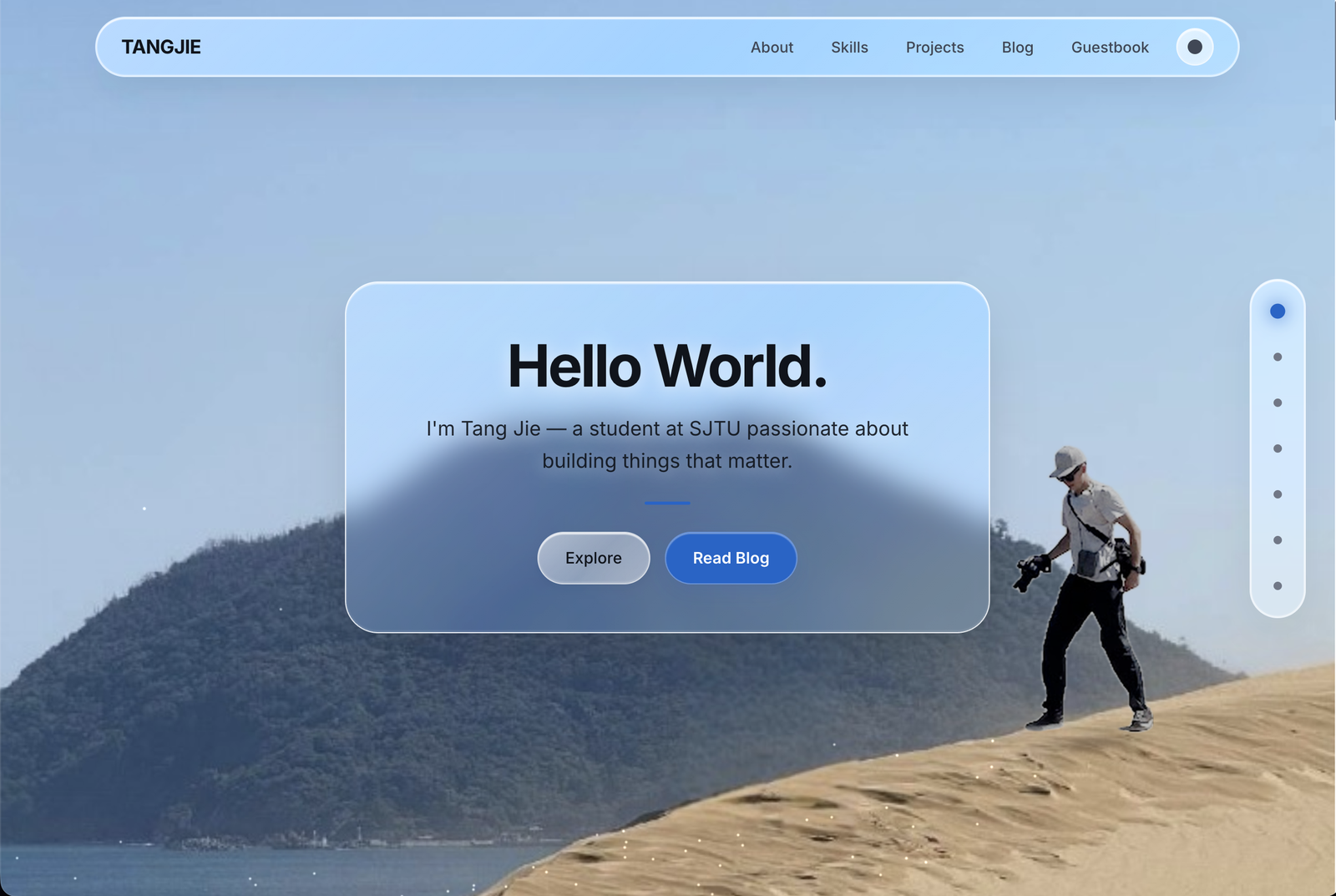
As of October 2026, my personal website is a cohesive, full-featured platform running on my server with Docker. It brings together:
- Interactive 3D Sand Dune background with scroll-driven walking animation, sand footprints trail, and Day/Night GLSL shaders
- 3D GitHub Contribution Skyline with live stats, streak tracking, and interactive camera controls
- Liquid Glass 2.0 design system with floating side dock and responsive mobile/desktop layouts
- Dynamic Weather widget with condition-reactive atmospheric effects and quick city switching
- Full Blog & Guestbook CMS with Markdown rendering, tag filtering, and Alpine.js admin panel
- Project showcase with automated GitHub metadata, stars, and pinned repository support
- Self-hosted privacy-first analytics and multi-layer security (CSRF, rate limiting, and Bleach XSS sanitization)
What's Next?
The journey continues. My site has evolved from a simple high school index.html to a full-stack Flask application with real-time WebGL shaders and 3D data visualization, and there is always more to explore:
- Deeper shader effects and interactive 3D storytelling
- Expanded blog series on embedded systems, ECE coursework, and software engineering
- Further performance tuning and asset optimization across devices
Reflections
Looking back at those early commits in 2022, I realize how far I've come. From a high schooler learning to write HTML to a sophomore at SJTU building 3D interactive web applications, my website has been a constant companion in my journey.
Every fix, every feature, every redesign tells a story of learning. The fix: commits aren't just bug fixes—they're lessons learned. The feat: commits aren't just new features—they're skills acquired.
To anyone building their own corner of the internet: keep going. Your website will grow with you, and it will become a testament to your journey. The git log of your life is waiting to be written.
No comments yet. Share your thoughts below.